Column · @thetilingslatinglife
A Guide to Tiling and Slating for Homeowners in Bearsden
Why Roofing Choices Matter in Bearsden
Living in Bearsden, you get used to the weather shifting on you. One morning the sun is out, and by the afternoon a steady drizzle has settled in. That kind of exposure puts real demands on a roof. When I first moved here and started working with local roofing contractors, I quickly learned that the choice between tiling and slating is not just about looks. It is about how your roof handles moisture, wind, and the freeze-thaw cycles that can crack lesser materials over time.
For most homeowners, the roof is out of sight and out of mind until something goes wrong. But if you are planning a new build, an extension, or a significant roof repair, understanding the basics of these two approaches helps you talk to contractors with confidence. You will know what questions to ask and why certain materials cost more than others.
In this article I want to walk through the key differences between tiling and slating, the materials involved, and the practical considerations that matter for a property in Bearsden and the surrounding areas. I will also touch on the supporting elements that make a roof last, from roofing felt to lead flashing.
The Core Difference Between Tiles and Slate
The term tiling and slating covers two distinct families of roofing materials. Tiles can be made from clay or concrete, while slate is a natural stone split into thin layers. That natural origin gives slate a unique character; no two slates are exactly alike. Concrete tiles and clay tiles, on the other hand, are manufactured to consistent dimensions and colours.
Scottish slate, in particular, has a long history in this part of the country. Quarries in the Highlands and islands produced a dense, durable stone that could last a century or more. Many older properties in Bearsden still carry original Scottish slate roofs, though repairs often involve sourcing reclaimed material because new quarries are limited. If you own an older house, a roofing contractor may recommend matching the existing slate as closely as possible to maintain the building's character and weathertightness.
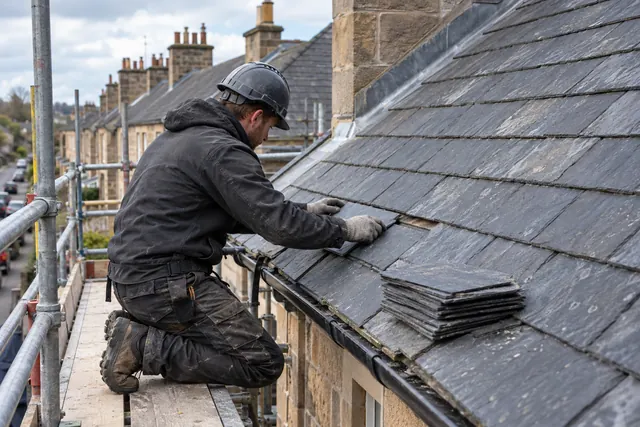
Concrete tiles are a more modern option. They are heavier than slate, which means the roof structure needs to be strong enough to take the load. But they are also cheaper and come in a wide range of profiles and colours. Clay tiles sit somewhere in between; they have a warm, traditional look that suits certain architectural styles, but they can be more brittle than concrete in severe frost.
Materials and Their Roles
A roof is more than the visible covering. Underneath the tiles or slates, a layered system works together to keep water out and let moisture escape. The roofing underlay is the first line of defence. It sits on top of the roof trusses and catches any water that might blow up under the tiles. Roofing felt is a traditional type of underlay, though modern synthetic membranes are more breathable and easier to install.
Roofing battens are the wooden strips nailed horizontally across the rafters. The tiles or slates hook onto these battens, so the spacing has to match the size of the material. Getting the batten gauge right is critical; if it is off by even a few millimetres, the roof will not look straight and the overlaps will be wrong.
Roofing nails are used to fix the battens in place and to pin each tile or slate. For slate, the nails are often copper or stainless steel because they do not rust. For concrete tiles, the nails are usually galvanised steel. Using the wrong nail can lead to premature corrosion and loose fixings.
Lead flashing is another essential component, especially around chimneys, valleys, and roof penetrations. Lead is soft and malleable, so it can be shaped to form a watertight seal against brickwork or stone. A good lead flashing installation should last decades, but it requires skill to dress the lead properly without cracking it.
Roof insulation and roof ventilation are often discussed together. Insulation keeps the heat inside your home, but if the roof space is not ventilated properly, moisture can build up and rot the timber. Modern building regulations require a balance between insulation thickness and ventilation paths. Your roofing contractor will know the local requirements, but it is worth asking how they plan to ventilate the roof deck.
Practical Considerations for Your Project
When you are choosing between tiling and slating, cost is an obvious factor. Slate is more expensive per square metre than concrete tiles, and the installation takes longer because each slate is fixed individually. Concrete tiles can be laid more quickly, which reduces labour costs. However, slate usually lasts longer if it is sourced well, so the total cost of ownership over fifty years might be lower for slate on a building that suits it.
Weight is another consideration. If you are replacing an existing slate roof with concrete tiles, the extra weight might require strengthening the roof structure. That adds cost and disruption. Conversely, if you are replacing concrete tiles with slate, the roof might need additional battens or counter-battening to accommodate the smaller slate size.
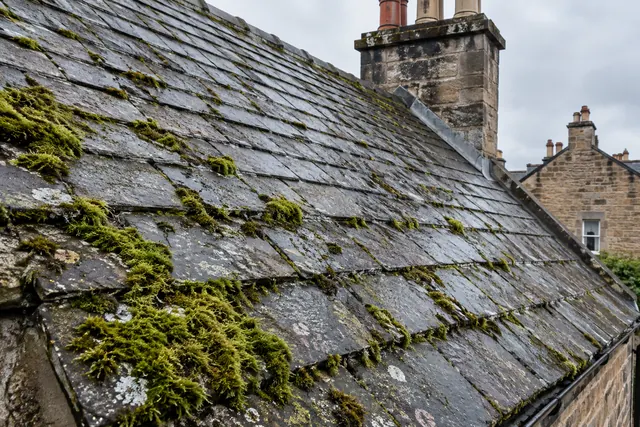
Appearance matters too. In Bearsden, where the landscape is green and the architecture ranges from Victorian villas to modern homes, the roof material can define the character of the house. A clay tile roof in a deep red or brown can look warm and inviting. A slate roof in a blue-grey or dark purple can look crisp and traditional. Many homeowners choose to match the style of neighbouring properties to preserve the streetscape.
Roof Repair and Maintenance
Even the best roof needs attention over time. Guttering systems play a huge role in protecting the roof edges and the foundations. If gutters are blocked or sagging, water can back up under the tiles and cause rot in the fascia boards. Regular gutter cleaning is a simple job that prevents expensive repairs.
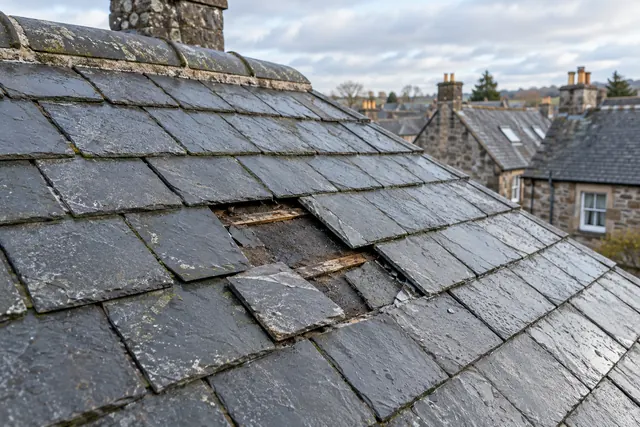
Roof repair after storm damage is common in Bearsden. High winds can lift tiles or slates, and heavy rain can overwhelm the guttering. When a few tiles are missing, the roof underlay is exposed to UV and moisture, which can accelerate deterioration. It is best to call a roofing contractor as soon as you notice a leak or a slipped tile. Delaying a small repair often turns it into a big one.
Roofing safety is not something homeowners usually think about, but it is worth mentioning. Working on a roof is dangerous. Slopes can be steep, surfaces can be slippery, and the height adds risk. Professional roofers use harnesses, scaffolding, and proper ladder anchors. If you are tempted to fix a loose tile yourself, consider the risk. A fall from even one storey can cause serious injury. Leave the high work to the people who do it every day.
Roofing mortar is used for bedding ridge tiles and for pointing around chimneys. Over time, mortar can crack and let water in. Re-pointing is a routine part of roof maintenance. Some modern roofing adhesives are more flexible than traditional mortar, which can help accommodate the small movements that happen as a building settles.
Tools and Techniques
Roofing tools for tiling and slating include slaters' hammers, tile cutters, and slate cutters. A slaters' hammer has a sharp pick on one side for making nail holes in slate. Tile cutters are used to score and snap concrete or clay tiles to size. For complex cuts around vents or chimneys, roofers use angle grinders with diamond blades.
The technique for fixing slate is different from fixing tiles. Slates are normally nailed at the top and then the next slate overlaps the nail head. Tiles often have a nib that hooks over the batten, with a single nail through a pre-drilled hole. The overlap distance varies by pitch and material. A roofing contractor will know the correct lap for your roof slope.
Roof ventilation is achieved through ridge vents, soffit vents, or tile vents. The aim is to allow air to flow from the eaves to the ridge, carrying moisture vapour away. If you are adding insulation to an existing roof, make sure the ventilation path is not blocked by insulation material.
Final Thoughts
Choosing between tiling and slating is a decision that affects the look, cost, and longevity of your home. In Bearsden, where the weather can be demanding, getting the details right matters. Talk to local roofing contractors who know the area and the materials. Ask to see examples of their work. A good roofer will be happy to explain why they recommend one approach over another.
Whether you opt for the natural beauty of Scottish slate or the practicality of concrete tiles, the underlying principles are the same: a well-ventilated, properly insulated roof with sound guttering and quality flashing will protect your home for decades. And if you are not sure where to start, a free directory like centralscotlandtradesmen.co.uk can connect you with trusted professionals who can give you a site-specific assessment.